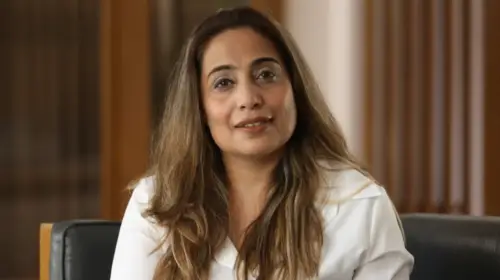
Interview with Sameera Sachdev | Clinical Psychologist | Trauma and Grief Specialist | Certified Mindfulness Facilitator | Founder at Sameera’s Win Over Mind
At BrilliantRead Media, we always strive to bring meaningful and powerful stories from India and around the world to empower and motivate our growing community. As part of this endeavour, we invited Sameera Sachdev for an exclusive interview with us. Sameera is a Clinical Psychologist, Trauma and Grief Specialist, Certified Mindfulness Facilitator and Founder at Sameera’s Win Over Mind. Let’s learn more about her background, journey and her advice for our community!
Excerpts from our exclusive interview with Sameera:
Could you please talk us through your background and your journey?
My journey has been shaped as much by what was missing as by what was present. I grew up with emotional neglect, an absence that quietly shaped an avoidant attachment style—one where independence became survival and vulnerability felt unsafe. For many years, I functioned well on the outside while remaining emotionally guarded on the inside.
Marriage became a turning point rather than an endpoint. It mirrored my unresolved patterns, brought buried grief to the surface, and required me to confront what I had learned to avoid: emotional presence, repair, and intimacy. This was not a linear journey, but one of reconciliation—first with myself, and then with others.
Professionally, I became a psychologist not to “fix” people, but to help them make meaning of their experiences. My work today—across grief, trauma, relationships, and women’s mental health—emerged directly from lived insight. What once felt like fragmentation has now become integration.
How did you discover your passion?
My passion did not arrive as inspiration; it emerged as a necessity. I began to notice how often people were treated for symptoms while their emotional stories remained unheard.
Whether the pain came from grief, relational loss, or conditions such as PCOS, the psychological cost was frequently invisible.
I discovered that my strength lies in sitting with complexity—holding space for pain without rushing it, and helping people transform suffering into clarity.
Over time, this grew into my work as a therapist, facilitator, and advocate, particularly in spaces where emotional neglect, grief, and identity loss are normalised, yet rarely named or tended to.
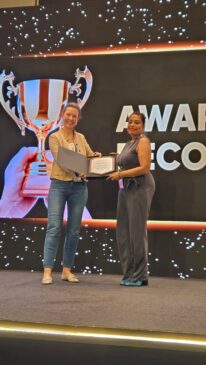
Your research on PCOS has received significant recognition, including a prestigious award. What key insight from this work do you believe can create the most real-world impact for women today?
What has stood out most to me in my work with PCOS is the amount of silent emotional weight women carry while appearing “medically managed.”
Many are told what their reports indicate, but few are asked what it feels like to live in a body that keeps changing one that does not respond predictably, that delays decisions around fertility, relationships, confidence, and even identity.
Over time, this creates a quiet erosion: of trust in the body, of certainty about the future, and of emotional safety. Most women do not name this as grief, but that is precisely what it is.
The deeper impact begins when care moves beyond symptom control and makes space for meaning-making and psychological support. When women understand how PCOS influences their mood, self-image, relationships, and decision-making, something shifts. They stop interpreting their experience as personal failure and begin relating to their bodies with greater compassion and clarity.
That movement—from self-blame to self-trust—is subtle on the surface, yet profound in its consequences. It changes how women live, choose, form relationships, and care for themselves over time.
Who do you believe has been the biggest source of motivation in your daily life?
My greatest motivation has come from two places: lived experience and the people I serve. My clients continually show me what courage truly looks like not through dramatic transformation, but through quiet persistence.
On a personal level, learning emotional regulation, repair, and reconciliation—particularly within marriage—has been profoundly motivating. It reminds me each day that growth remains possible even when patterns are deeply rooted, and that safety can be built, not merely inherited.
What are some of the strategies that you believe have helped you grow as a person?
Three strategies have been central to my growth:
a) Meaning-making over avoidance – choosing to understand pain rather than outrun it.
b) Repair over perfection – learning that relationships do not require flawlessness, but honesty and the willingness to repair.
c) Regulation before resolution – recognising that emotional safety must come before insight or action.
Alongside these, mindfulness, trauma-informed practice, and sustained self-reflection have helped me remain grounded while working in emotionally intense spaces.
In your opinion, what are the keys to success?
Success, to me, is alignment rather than achievement the ability to live and work without fragmenting yourself.
Its foundations are simple, though not easy:
1) Emotional literacy
2) The capacity to tolerate discomfort
3) The willingness to outgrow old identities
4) Building support systems rather than glorifying self-reliance
Sustainable success emerges from integration: when who you are and what you do no longer exist in separate worlds.
What advice would you give to our readers?
Do not rush your healing to appear functional. Many people learn to survive by becoming efficient while remaining emotionally disconnected.
If something keeps repeating in your life—relationships, grief, burnout—it is not failure; it is information. Pause long enough to listen.
Growth does not begin with fixing yourself. It begins with understanding yourself kindly, honestly, and without shame.
BrilliantRead is committed to bringing stories from the startup ecosystem, stories that reshape our perspective, add value to our community and be a constant source of motivation not just for our community but also for the whole ecosystem of entrepreneurs and aspiring individuals.
Note: If you have a similar story to share with our audience and would like to be featured on our online magazine, then please write to us at [email protected], we will review your story and extend an invitation to feature if it is worth publishing.